

Bumper Repair Auckland for Scrapes, Cracks and Dents
A bumper scrape can look minor in the supermarket car park, then become impossible to ignore every time you walk back to your vehicle. Whether it is paint transfer from a tight parking space, a cracked corner after a low-speed impact, or a bumper sitting loose beneath a headlight, professional bumper repair Auckland drivers can rely on is about more than making the damage less noticeable. The repair needs to look right, fit correctly and protect the components behind it.
At Professional Panel + Paint in Grey Lynn, we assess the full extent of the damage before recommending a repair. That means honest advice on whether your bumper can be restored, whether replacement makes better sense, and what is involved in returning your vehicle to a professional standard.
What a damaged bumper can be hiding
Most modern bumpers are made up of more than the painted outer cover. Behind that visible plastic are energy-absorbing materials, brackets, reinforcement bars, parking sensors, wiring and, on some vehicles, radar equipment that supports driver-assistance systems.
A light scuff may only affect the paint surface. A deeper scrape can cut into the plastic, while a crack may indicate that clips or mounting points have also been damaged. Even when the bumper appears largely intact, an impact can push it out of alignment with the guard, bonnet or headlight.
This is why a quick visual judgement is not always enough. A proper inspection helps identify whether the job is cosmetic or whether it involves repair work beneath the surface. It also avoids the frustration of paying for a paint touch-up, only to find the bumper still does not sit correctly a few weeks later.
Bumper repair Auckland: repair or replacement?
The right answer depends on the location, depth and type of damage, as well as the vehicle itself. Repair is often a practical option for scuffs, paint damage, minor dents, small splits and localised cracks. Skilled panel technicians can reshape plastic, repair damaged areas, prepare the surface correctly and refinish the bumper with colour-matched paint.
Replacement may be the better choice when there is extensive tearing, severe distortion, broken mounting points across a large area or damage that compromises the bumper’s fit and function. It can also be necessary where sensor locations, grilles or moulded sections cannot be restored to a reliable standard.
Replacing a bumper is not automatically the better repair. A quality repair can be more cost-effective and avoids replacing a part that still has plenty of service life left. On the other hand, repairing damage beyond its sensible limit can create repeat issues. The aim should be a durable result, not simply the cheapest first step.
Common bumper damage we see
Paint transfer and shallow scuffs are common after brushing a post, garage wall or another vehicle. These may polish out if they have not broken through the clear coat, but deeper marks usually require local repair and repainting.
Cracks, splits and punctures need more careful attention. Plastic bumper materials flex, so a crack that is filled without the correct preparation can reopen. The damaged area must be stabilised and repaired using suitable processes before refinishing.
Loose bumpers are another frequent issue, particularly after a corner impact. Sometimes the solution is a damaged bracket or clip. Sometimes the bumper cover itself has distorted or torn around its mounting points. An inspection will confirm what needs attention.
What a professional bumper repair involves
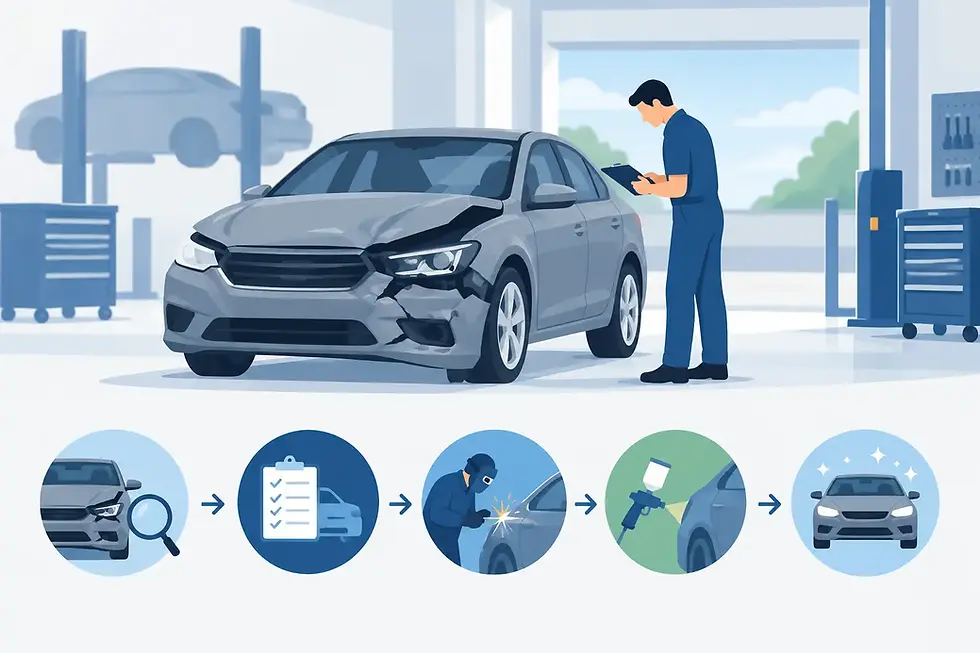
A good bumper repair starts with an assessment, not a guess. Your vehicle is checked for visible damage, panel alignment, broken fixtures and any concerns around lights, sensors or safety-related components. We then provide a clear repair estimate and explain the expected scope of work before work begins.
Once approved, the bumper may be removed where access and repair quality require it. Removing it allows the technician to inspect hidden damage and ensures repairs are not rushed around trims, lights or guards. The damaged plastic is reshaped or repaired, then the surface is prepared for primer, colour and clear coat.
Colour matching matters just as much as the physical repair. Paint changes over time through sun exposure, washing and normal wear. Using colour-matching technology and careful spray-painting processes helps the repaired bumper blend naturally with the surrounding panels. Depending on the colour and the area affected, blending into adjacent panels may be recommended for the most consistent finish.
Finally, the bumper is refitted, aligned and checked. If your vehicle has parking sensors or other equipment in the bumper, these components need to be handled with care throughout the process. A professional repair should leave the vehicle looking right and functioning as intended.
How long does bumper repair take?
Turnaround depends on the damage, paintwork required, parts availability and insurance approval where a claim is involved. A straightforward cosmetic repair may be completed sooner, while a cracked bumper, replacement part or related panel damage can add time.
For most repairs, Professional Panel + Paint aims for a five to seven working day turnaround. We will give you a realistic timeframe after inspecting the vehicle and keep you informed if parts or insurer approvals affect the schedule. No one wants vague promises when they rely on their car for work, school runs or daily travel.
If being without your vehicle would create a real problem, ask about loan vehicle availability when booking. It is best to arrange this early, particularly during busy periods.
What affects bumper repair cost?
There is no reliable one-price answer for bumper repairs because the visible mark is only part of the picture. Cost is affected by the extent of plastic repair, whether paint has been damaged, the size of the area requiring refinishing, the need for removal and refitting, and whether brackets, trims, sensors or other parts need replacement.
Vehicle make and model also matter. Some bumper covers are straightforward, while others contain multiple grilles, cameras, sensor mounts and mouldings that increase labour and parts requirements. Premium paint colours, pearls and metallic finishes can require additional care to achieve a consistent match.
The best way to avoid surprises is to get an assessment and written estimate. A transparent quote gives you a clear view of what is being repaired and why, rather than leaving you to compare vague figures that may not cover the same work.
Using insurance for bumper damage
If another driver caused the damage, or your policy covers accidental damage, your insurer may fund the repair less any applicable excess. The claims process can feel like another task when you are already dealing with a damaged vehicle, particularly if you need photos, claim details or insurer approval.
An insurer-compatible repairer can help make the process more manageable. Bring through your claim information if you have it, and the workshop can assist with the estimate, repair scope and communication required for the claim. If you are unsure whether to claim, it can still be worthwhile getting the damage assessed first. You can then compare the repair estimate with your excess and consider how the claim fits your circumstances.
Do not delay an inspection simply because the bumper damage appears cosmetic. A loose bumper, exposed sharp edge, damaged light fitting or sensor warning should be checked promptly. These issues can worsen with normal driving and may affect the vehicle’s safety or roadworthiness.
Protecting the finish after repair
Once the repair is complete, give fresh paint time to cure as advised. Avoid harsh washing products, abrasive polishing and automatic car washes for the recommended period. When washing the vehicle, use clean mitts and avoid rubbing dust or road grime across the bumper, as this can create fine scratches.
Parking carefully is the simplest long-term protection. Leave extra room near high kerbs, concrete pillars and tight parking bays, especially if your vehicle has a low front bumper. Parking sensors and cameras are useful aids, but they do not always detect low objects or narrow posts.
A damaged bumper does not need to become a long-running annoyance or a rushed repair. Arrange an assessment, get clear advice, and choose a repair approach that gets your vehicle looking right and back on the road with confidence.


Comments