

A Guide to Accident Repair Claims in Auckland
A collision can turn an ordinary trip home into a long list of decisions. This guide to accident repair claims helps Auckland drivers take the right steps after vehicle damage, from recording what happened to arranging repairs that restore safety, appearance and confidence behind the wheel.
Whether you have a scraped bumper in a car park, a dented door after a low-speed crash or more serious structural damage, acting calmly and keeping clear records will make the process easier. The goal is not simply to get the car looking better. It is to make sure hidden damage is identified, the insurer has the information it needs and the repair is completed to a professional standard.
Start with safety and accurate information
Immediately after an accident, check that everyone is safe and move the vehicle out of traffic if it is safe and legal to do so. If anyone is injured, the road is blocked or the vehicle cannot be driven safely, contact emergency services and arrange recovery where required.
Once the immediate risk has passed, take photos of the vehicles, damage, number plates, road position and surrounding area. If there are skid marks, broken parts or relevant signs, capture those too. Photographs taken at the scene can be useful even when the damage initially appears minor.
Exchange names, contact details, registration numbers and insurer information with the other driver. Avoid accepting blame or agreeing to a private cash arrangement before the damage has been properly assessed. A bumper that looks like it only needs paint may also have damaged brackets, sensors or reinforcement behind it.
Write down the time, location, weather conditions and your account of what occurred while it is fresh in your mind. If there are witnesses, ask for their details. These simple notes can be valuable if the accounts of the incident differ later.
Contact your insurer before repairs begin
Most insurance policies require you to notify the insurer as soon as reasonably possible after an accident, even if you are unsure whether you will make a claim. They will open a claim, provide a claim number and explain what information they need. Keep that number handy, as your repairer will usually need it before insurer-funded work can proceed.
Your excess, cover type and the circumstances of the accident affect what happens next. If another driver is clearly at fault and their details are confirmed, your insurer may seek recovery from their insurer. You may still need to pay an excess initially, depending on the policy and insurer's decision. If the repair cost is close to or lower than your excess, paying privately can sometimes be more practical, but get a written repair estimate before deciding.
It also depends on the age and value of the vehicle. A more substantial collision may lead the insurer to assess whether repair is economically viable. That assessment is separate from whether the vehicle could physically be repaired, and it is worth asking for a clear explanation if the insurer considers the vehicle a total loss.
A guide to accident repair claims and damage assessments
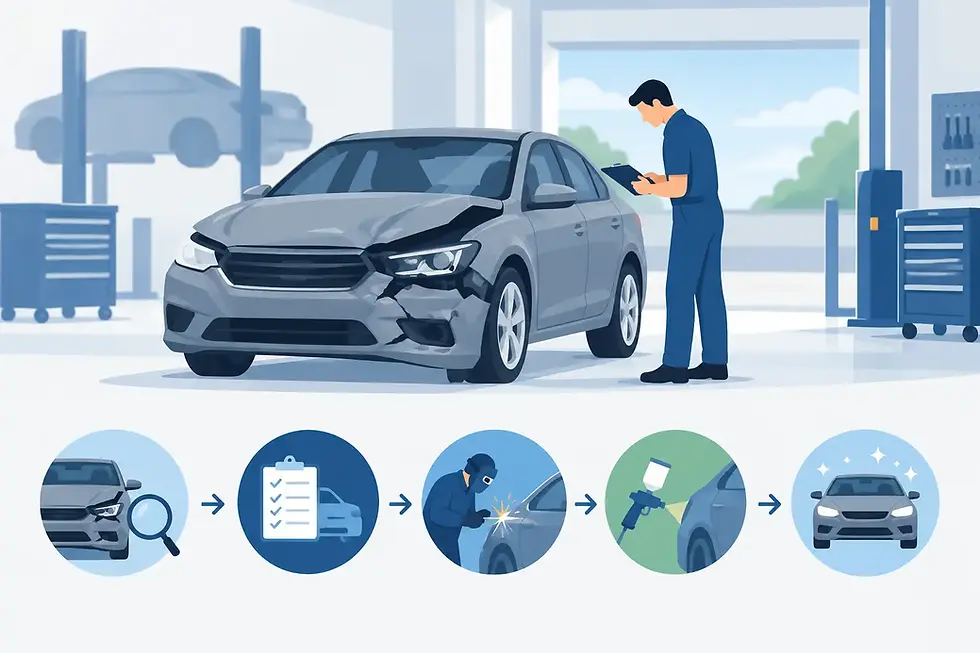
An insurer may arrange an assessment, ask for photos or authorise a repairer to inspect the vehicle. A thorough estimate should cover more than the visible dent or scratch. It needs to identify damaged panels, trims, lights, mounting points, safety systems and paintwork, as well as the labour needed to return the vehicle to its pre-accident condition.
Some damage is only visible once a panel, bumper or interior trim is removed. This is common after impacts to corners, doors and bumpers. If further issues are found during the repair, the workshop submits a supplementary estimate to the insurer for approval. This can add time, but it is better than covering up damage or compromising the quality of the repair.
Ask the repairer to explain the proposed work in plain language. You should understand which parts will be repaired or replaced, whether supplier or aftermarket parts are proposed where relevant, and whether colour matching and refinishing will extend into adjacent panels. Proper paint blending can be necessary for a consistent finish, especially on metallic, pearl and older paint colours.
A quality assessment also considers safety. Modern vehicles often have parking sensors, cameras, radar equipment and other systems fitted behind bumpers, mirrors and windscreens. These components may need inspection, calibration or replacement after an impact. Choosing the cheapest-looking estimate can be a false saving if essential work is missed.
Choosing a repairer you can trust
You do not need to feel rushed into sending your vehicle somewhere without asking questions. Confirm whether the repairer works with your insurer, can liaise directly on approvals and will provide a clear repair plan. An experienced panel and paint workshop should be comfortable explaining timeframes, parts availability and any factors that could delay completion.
Look for qualified technicians, an organised workshop and evidence of consistent finished work. Paint repair is particularly visible in Auckland's changing light, so colour-matching equipment, clean preparation and careful refinishing matter. The same applies to panel alignment: gaps around doors, bonnets, guards and bumpers should be even, and opening panels should operate correctly.
At Professional Panel + Paint, the team supports customers through the repair and insurer communication process, with honest advice on what the vehicle needs. For many standard repairs, the target turnaround is five to seven working days, although parts supply, insurer approvals and hidden damage can affect that timing.
If your car is essential for work or family transport, ask about a loan vehicle or alternative transport early. Availability is often limited, and arranging this at the start can reduce disruption while your car is in the workshop.
Keep communication clear while the work is underway
Once repairs are authorised, a good repairer should keep you informed rather than leaving you to chase updates. Ask who your main contact will be and how you will be told about additional damage, approval delays or changes to the expected completion date.
There are several points where a repair can take longer than expected. Insurers may need time to approve a supplementary estimate, replacement parts can be delayed, and paintwork needs correct preparation and curing time. Fast work is useful, but rushing panel repairs or refinishing can create problems that are more frustrating than a short, well-explained delay.
Before collecting the vehicle, inspect it in daylight where possible. Check the repaired area from different angles, make sure paint colour and gloss look consistent, and test doors, the boot, lights, windows and parking sensors. Ask about any care instructions for fresh paint. In most cases, avoiding harsh washing products and high-pressure washing on newly painted areas for the recommended period will help protect the finish.
Avoid the common claim shortcuts
The most avoidable problems usually begin before the car reaches a workshop. Delaying notification to the insurer, failing to take photographs or agreeing to an informal payment without an estimate can make an otherwise straightforward claim harder.
It is also worth resisting the temptation to keep driving a damaged vehicle because it still seems usable. A loose bumper, misaligned light, damaged wheel arch liner or sensor warning may create a safety issue or allow further damage from water and road debris. If the steering, wheels, lights, bonnet, boot or doors are affected, have the vehicle checked promptly.
Finally, do not judge a repair only by the first price quoted. Transparent pricing matters, but so do correct repair methods, quality parts, paint finish and proper reinstatement of vehicle systems. Clear documentation, realistic timeframes and direct answers are signs that the repair is being managed properly.
After an accident, you have enough to think about without coordinating every detail alone. Keep the evidence, ask direct questions and choose a repairer that treats your vehicle's safety and finish with the same care you do.


Comments