

Insurance Car Repairs Auckland Made Simple
A scrape in a Ponsonby car park, a rear-end collision on the motorway or a damaged bumper outside home can turn an ordinary day into a stressful one. When you need insurance car repairs Auckland drivers can rely on, the priority is not just making the damage disappear. It is getting your vehicle assessed properly, your claim moving and your car returned safe, sound and looking right.
The repair process can feel unclear when you are dealing with an insurer, an excess and the disruption of being without your vehicle. A good local panel and paint workshop takes ownership of the practical details, explains what is happening and gives you an honest timeframe from the start.
Start with safety, evidence and a claim number
After an accident, check that everyone is safe and move the vehicle out of danger if it is safe to do so. If the car is not roadworthy, do not keep driving it simply because the damage looks minor. A bumper can hide damage to brackets, sensors, lights, cooling components or the structure behind it.
Take clear photos of the scene, vehicle damage, number plates and the other driver's details. Record the time, location and a short account of what happened while it is fresh in your mind. If another vehicle is involved, exchange contact, registration and insurance information. Police reporting requirements depend on the circumstances, particularly where someone is injured, there is significant damage or a driver leaves the scene.
Contact your insurer as soon as practical and lodge the claim. They will usually provide a claim number and explain your policy excess, cover and next steps. Keep that number handy when you speak with a repairer. It helps the workshop communicate efficiently with the insurer and prevents unnecessary back-and-forth.
How insurance car repairs in Auckland usually work
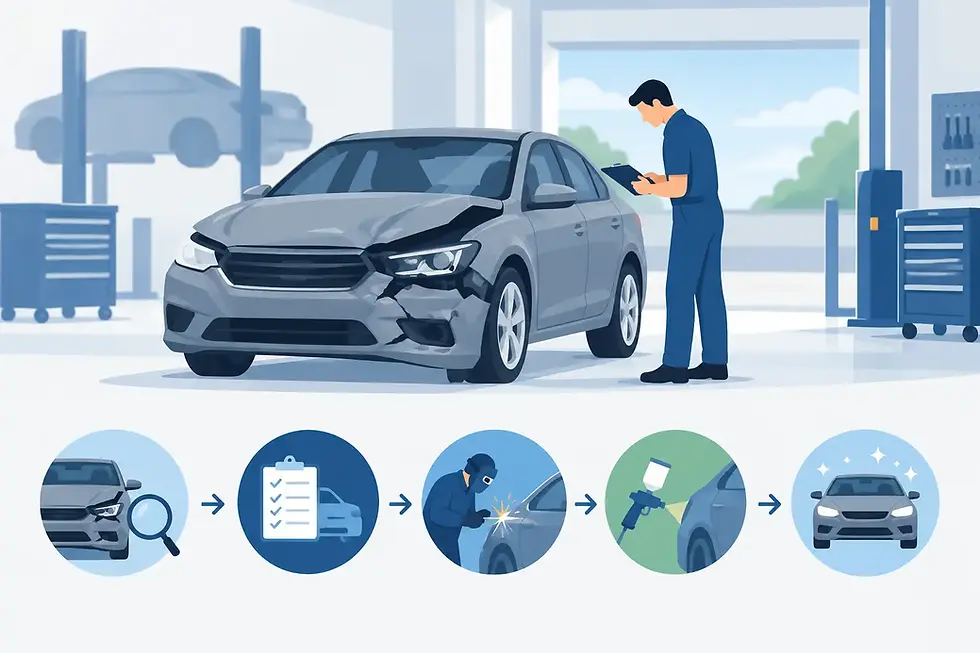
Every insurer and policy has its own process, but the path from damaged car to completed repair is generally straightforward. First, the repairer inspects the vehicle and prepares a repair plan. This covers visible damage as well as issues that may be found once trims, bumpers or panels are removed.
The estimate is then reviewed through the insurer's process. Depending on the claim and insurer, an assessor may inspect the vehicle or the repairer may submit photographs, documentation and an estimate for approval. Once authority is received, parts can be ordered and repair work scheduled.
This is also why a quick glance at a dent is not always enough to give a final price or completion date. Modern vehicles have parking sensors, cameras, radar equipment, plastic components and complex paint finishes. What looks like a small impact can require careful work to restore safety systems and panel alignment correctly.
If additional damage is uncovered during the repair, the workshop should document it and seek approval before carrying out that extra work. This is one of the most important parts of a transparent repair process. You should not be left wondering why the scope has changed or whether you will receive an unexpected bill.
Your excess and repair costs
Your excess is the amount you may need to pay towards an insured repair, subject to your policy and the circumstances of the accident. Whether it applies can depend on factors such as who was at fault, whether the other driver is identified and what level of cover you hold. Your insurer can confirm this directly.
Avoid choosing a repairer solely because an estimate appears lower at first glance. A quality repair is about more than filling and painting the visible mark. It may involve proper panel preparation, corrosion protection, correct replacement parts, calibration or checks for affected safety equipment, and colour matching that blends naturally with surrounding panels.
For damage that falls below your excess, or where you are paying privately, ask for a written estimate that clearly explains the proposed work. An experienced workshop will be upfront about what can be repaired, what should be replaced and any factors that could affect the final cost.
Choosing the right Auckland repairer
The workshop you choose has a direct effect on the finish, safety and value of your vehicle. It is worth looking for a team with qualified technicians, proper panel and paint facilities, experience with insurance work and a clear process for keeping customers informed.
Ask how the repairer will handle paint matching. Auckland's strong sun can fade paint over time, so painting one panel alone may not always give the best visual result. A professional painter uses colour-matching technology and may blend colour into adjoining panels where needed to achieve a consistent finish. The right approach depends on the vehicle's age, colour and location of the damage.
Also ask about parts. In some cases, genuine manufacturer parts are specified or preferred. In others, quality alternative parts may be appropriate and accepted under the repair authority. The key is that the repairer explains what is being fitted and why, rather than treating it as an afterthought.
A local workshop is particularly useful when you need an in-person assessment, regular updates or a quick solution for a minor repair. For central Auckland drivers, Professional Panel + Paint in Grey Lynn provides a practical point of contact close to Ponsonby and surrounding suburbs, with support from estimate through to refinishing and handover.
What a proper repair should include
A professional collision repair is a sequence of careful steps, not simply paint over damage. The exact work will vary, but a sound repair often includes:
a detailed damage assessment, including hidden damage where required
panel repair or replacement, with correct alignment and secure fitment
preparation, priming and refinishing using matched paint products
reassembly and checks of lights, trims, sensors and affected components
a final quality inspection before the vehicle is returned.
For cosmetic jobs, such as bumper scuffs, door dents or paint scratches, repairs may be completed more quickly. More substantial accident damage can take longer because parts availability, approval timing and structural repair requirements all matter. Most straightforward repairs can often be planned within five to seven working days once approval and parts are in place, but it is better to receive a realistic timeframe than a promise that cannot be met.
Keeping life moving while your car is in the workshop
Being without a car can be the hardest part of the experience, particularly if you commute, transport children or use your vehicle for work. Ask early about loan vehicle availability and whether your insurance policy includes replacement transport. These arrangements vary, so sorting them before repairs begin makes the process far less disruptive.
You can also help keep the job on track by removing personal items from the cabin and boot, providing spare keys if requested, and letting the workshop know about any existing mechanical concerns or warning lights. Clear communication helps the team separate pre-existing issues from accident-related damage and avoid delays at collection time.
Questions worth asking before authorising repairs
You do not need to be a car expert to make a confident decision. Ask whether the workshop deals directly with your insurer, how they will communicate updates, what repair time they expect and whether parts need to be ordered. It is also reasonable to ask how they manage hidden damage, paint matching and final quality checks.
If the answer is vague, keep looking. Good repairers do not make unrealistic promises, but they do explain the process in plain language. They understand that you want no surprises, especially when the car is essential to daily life.
When the vehicle is ready to collect
At handover, take a few minutes to inspect the repaired area in good light. Check that panel gaps look even, paint finish is consistent and lights, sensors, doors, bonnet and boot operate as they should. A reputable workshop will walk you through the completed work and answer questions before you leave.
If anything does not look or feel right, raise it promptly. Small concerns are easier to address when they are discussed early. Keep your repair paperwork and insurer correspondence for your records, particularly if you sell the vehicle later or need to refer to the work performed.
Vehicle damage is inconvenient, but the repair experience does not need to add to the stress. Choose a workshop that communicates clearly, works carefully with your insurer and treats your car as the vehicle you depend on every day. That is how a difficult incident becomes a well-managed repair and a safe return to the road.


Comments