

Car Paint Colour Matching Service in Auckland
A scrape along the bumper, a dented door or paint rubbed off in a car park can look like a small problem until the repair stands out from the rest of the vehicle. A professional car paint colour matching service is what makes the difference between a repair that blends in and one that catches your eye every time you walk back to the car.
For Auckland drivers, correct colour matching is about more than appearance. It protects the value of your vehicle, helps repaired panels look consistent in changing light, and gives you confidence that the job has been completed properly. At Professional Panel + Paint in Grey Lynn, colour matching is part of the full repair process, from assessment and panel work through to final polishing.
Why an exact paint match is harder than it looks
Your vehicle may have a paint code, usually found on a manufacturer label, but that code is a starting point rather than a guarantee of a perfect match. The same factory colour can vary slightly between production batches, and the paint on your car changes over time.
Sun exposure, road grime, regular washing and previous repairs can all alter how a panel appears. Metallic, pearl and three-stage finishes add another level of complexity because the way light reflects from the paint can change depending on the spray angle and the panel being viewed.
This is why a touch-up pen or an off-the-shelf aerosol can be useful only for the smallest, least noticeable chips. On a bumper corner, guard, door or bonnet, the difference in shade, gloss or metallic effect is often obvious. A workshop-based repair gives the technician the controlled conditions, equipment and experience needed to assess the actual vehicle colour rather than relying on the paint code alone.
How our car paint colour matching service works
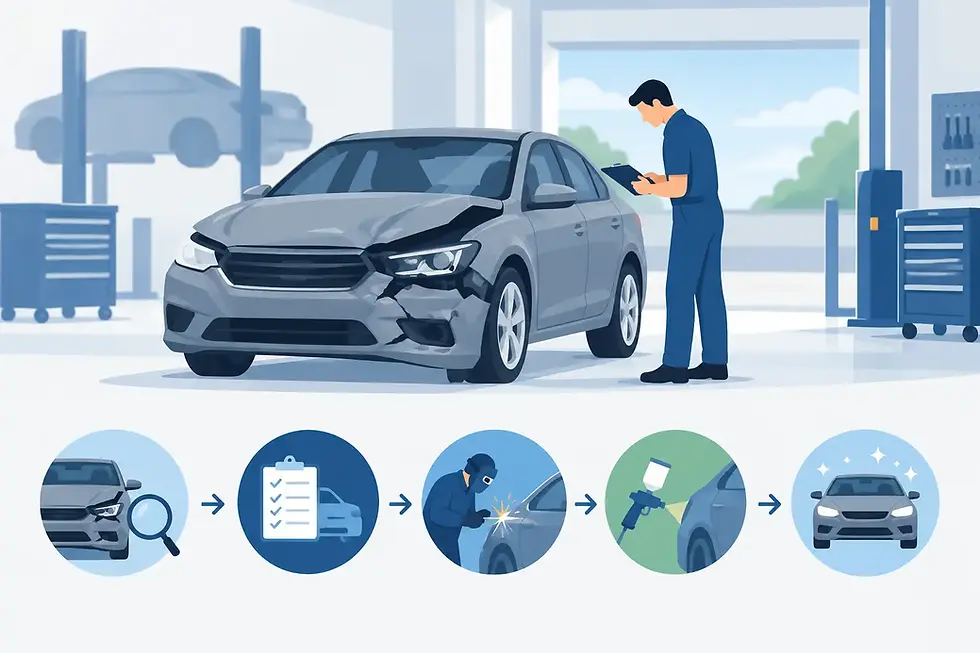
A good finish starts well before paint is mixed. We inspect the damaged area and the nearby panels to determine what needs repairing, whether there is hidden damage underneath and how far the refinishing work should extend. Clear advice at this stage helps avoid surprises with cost, timing or the expected result.
Assessing the colour and existing finish
Technicians use colour-matching technology to identify the closest formula for your vehicle's current paint, then compare it against the adjacent panels. This is particularly valuable on older vehicles, cars regularly parked outdoors and colours that show variation easily, such as silver, white, red, black and many modern metallic shades.
The finish is also assessed for fading, scratches, stone chips and previous paintwork. If the surrounding paint has weathered, matching the original factory formula exactly may not produce the best visual result. The right approach is to match what is on the vehicle now.
Repairing the panel properly
Paint cannot hide poor preparation. Before refinishing, we complete the required panel beating, bumper repair or surface preparation so the repaired area is smooth, stable and ready for paint. For collision damage, this can also involve checking panel alignment and addressing structural concerns before cosmetic work begins.
The repair area is then prepared, primed and sanded with care. Dust, uneven surfaces and inadequate preparation can affect both the appearance and durability of the finish, even when the colour itself is correct.
Blending for a natural result
Rather than stopping paint sharply at the edge of a repair, technicians may blend colour into an adjacent panel and apply clear coat across the appropriate area. This softens the transition and helps metallic particles, pearl effects and gloss appear consistent from different angles.
Not every repair requires blending across several panels. A small repair in a low-visibility area may be contained, while damage near a panel edge or on a highly visible section may need a wider refinishing approach. It depends on the colour, the damage, the vehicle's age and the condition of the existing paint. We explain the recommended method before work begins, so you understand what the repair involves.
When colour matching matters most
Colour matching is relevant for almost any painted repair, but it is especially important where the eye naturally notices differences. Bumpers, front guards, doors, bonnets and rear quarters sit beside other large painted surfaces, making even a subtle mismatch more visible.
It also matters after accident repairs. A vehicle can be mechanically safe but still look unfinished if a replacement panel has been painted without properly matching and blending the surrounding finish. For many owners, that is not an acceptable outcome, particularly on a newer car, a well-maintained family vehicle or a work vehicle that represents their business.
Plastic bumpers can require particular care. Paint can reflect differently on plastic than on metal, even when the same colour formula is used. Correct preparation and application techniques help create a consistent result across the bodywork.
Insurance repairs and cosmetic damage
If another vehicle has hit your car or you are making a claim for accidental damage, paint matching is usually included as part of a quality collision repair scope. The key is ensuring the estimate allows for the preparation, refinishing and blending required to return the vehicle to its pre-accident condition as closely as practical.
An insurer may need photos, an assessment or repair documentation before work is approved. A repairer that understands the claims process can help coordinate the information, communicate with the insurer and keep you updated on timing. That takes some pressure off when you are already dealing with transport, work and family commitments.
For privately funded repairs, an honest assessment is equally useful. Sometimes a cut and polish or targeted touch-up can improve a light mark at a lower cost. Where paint has been broken, the panel is dented or the damage reaches the plastic or metal beneath, a proper repair and refinish is generally the more durable option.
What affects the cost and repair time?
There is no single price for colour matching because it is part of a wider paint repair. The cost depends on the size and location of the damage, the amount of panel repair required, the paint type, whether adjoining panels need blending and whether parts need to be removed or replaced.
A straightforward bumper scuff may take less time than a dented door with paint damage, while a complex accident repair can involve several panels and insurer approval. Most standard repairs can be planned around a five to seven working day turnaround, although parts availability, the extent of damage and claim authorisation can affect that timeframe.
Be cautious of quotes that focus only on getting paint onto the damaged spot. A lower initial figure may not include the preparation or blending needed for a professional result. A transparent quote should set out the repair approach and identify any factors that could change the timing or cost.
Looking after newly refinished paint
Once your vehicle is collected, the repaired area should look clean, glossy and consistent with the surrounding panels. Fresh paint continues to cure after it leaves the workshop, so follow any care advice provided by your repairer. Avoid harsh cleaning products or abrasive polishing on the new finish during the early curing period.
Regular gentle washing, prompt removal of bird droppings and parking under cover where possible will help preserve the finish across the whole vehicle. If you notice anything that concerns you after collection, raise it promptly. A reputable repairer should be available to answer questions and stand behind the work.
Visible damage does not need to become a lasting reminder of a crash, a tight car park or a careless trolley. Bring the vehicle in for an assessment, ask how the paint will be matched and blended, and choose a repair approach that gets you back on the road with a finish you can feel good about.


Comments