

How Do Insurance Car Repairs Work in Auckland?
A damaged bumper, bent guard or scraped door can disrupt far more than your morning commute. The practical question is: how do insurance car repairs work once the incident has happened? In most cases, you lodge a claim, your insurer confirms what is covered, a repairer assesses the damage, and work begins once approval is in place. A good repair workshop helps keep each step clear, so you are not left chasing updates while your car is off the road.
Start with safety, evidence and your insurance claim
After an accident, make sure everyone is safe and move the vehicle out of danger if it is safe to do so. Exchange details with the other driver, including their name, registration number, contact details and insurer where available. Take clear photos of the vehicles, damage, road conditions and the wider scene.
You should then contact your insurer or lodge a claim through its app, website or phone line. Have your policy number, incident date and location ready, along with the other party's details and any photos. Your insurer will give you a claim number. Keep it handy, as your repairer will normally need it before they can speak to the insurer about your vehicle.
If your car is not safe to drive - for example, a wheel is damaged, lights are broken, panels are loose or there may be structural damage - arrange towing through your insurer or roadside assistance provider. Do not assume cosmetic-looking damage is only cosmetic. A low-speed impact can affect bumper reinforcements, parking sensors, brackets and alignment behind the visible panel.
How do insurance car repairs work after you lodge a claim?
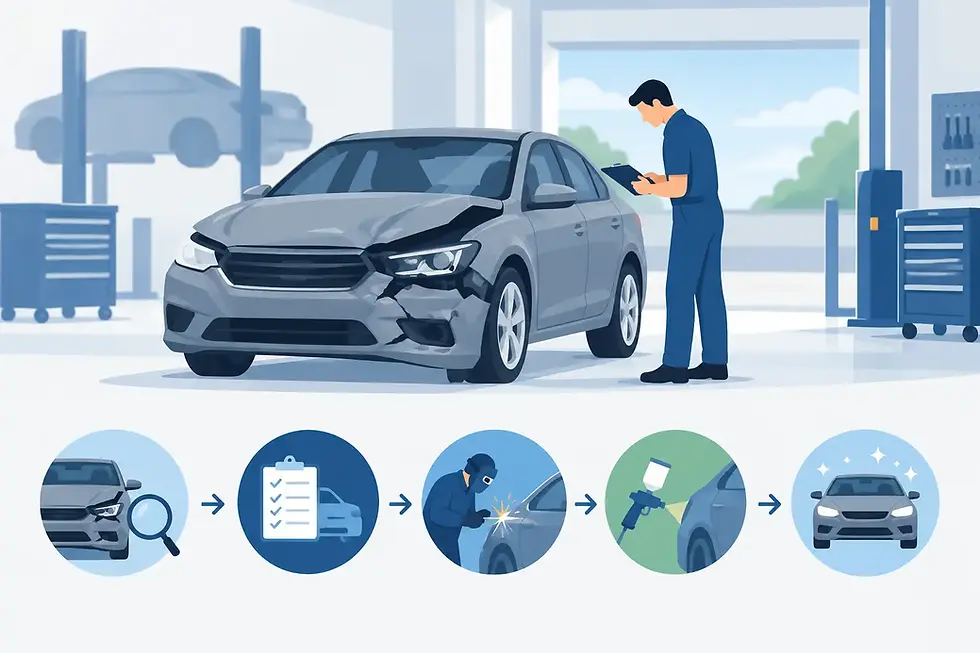
The exact process depends on your policy, insurer and the extent of damage, but the usual sequence is straightforward. Your insurer records the claim and tells you whether you can choose your own repairer or need to use one from its approved network. In many cases, you can nominate a repairer you trust, although it is worth checking your policy wording before authorising work.
The repairer then completes an initial estimate. This identifies visible damage, the likely repair method, parts required, paint and refinishing work, and anticipated labour. Photos and the estimate are sent to the insurer for review where required.
For more significant damage, the insurer may appoint an assessor. The assessor reviews the estimate and decides whether repairs are reasonable compared with the vehicle's insured value. They may inspect the car in person, review images remotely, or work directly with the repairer. This is not usually a judgement on the quality of the workshop. It is part of the insurer's process for approving the repair cost.
Once repairs are authorised, parts can be ordered and a booking date confirmed. Professional Panel + Paint can liaise with insurers throughout this process, helping Auckland drivers understand what is happening and what is needed next.
Your excess and what you may need to pay
Your excess is the amount you contribute towards an accepted claim. It is set out in your insurance policy and is usually paid directly to the repairer when you collect the vehicle, although arrangements can vary.
Whether you pay an excess depends on the circumstances and your policy. If another driver was clearly at fault and you provide their identifying details, your insurer may waive it. If fault is disputed, the other driver is uninsured, or you cannot identify who damaged your parked car, you may need to pay your excess first while the insurer considers recovery.
Ask early whether an excess applies and how it will be collected. It avoids an unpleasant surprise at collection time. Also ask about a hire car or loan vehicle. Some policies include replacement transport, others offer it as an optional extra, and some do not provide it at all. A local repairer may have loan vehicle options, subject to availability and eligibility.
Assessment can reveal damage that was not visible at first
An estimate is based on what can be seen before disassembly. Once damaged trims, bumpers or panels are removed, technicians can sometimes find broken mounting points, damaged absorbers, wiring issues, cracked brackets or misaligned components.
This is called supplementary damage. When it happens, the repairer documents it and sends a supplementary estimate to the insurer for approval before continuing. It can extend the original timeframe, particularly if additional parts are needed, but it is the right way to repair the vehicle properly rather than refitting damaged components out of sight.
Modern vehicles can make even minor impacts more involved. Cameras, radar sensors, blind-spot monitors and parking sensors may require careful removal, replacement or recalibration. The goal is not simply to make the outside look right. It is to restore the vehicle's safety systems and finish to an appropriate professional standard.
What the repair work usually includes
Every job is different, but an insurer-approved collision repair may involve panel beating, plastic bumper repair, replacement parts, chassis or structural measurement, spray painting, paint blending and final polishing. Where a panel can be safely repaired, that may be more efficient than replacement. Where it cannot be returned to a sound condition, replacement may be the better option.
Parts are another area where policies differ. Depending on the age of the vehicle, availability and policy terms, repairs may use genuine manufacturer parts, new aftermarket parts or quality recycled parts. Your repairer should explain the approach where it affects the job. The best option is not always the most expensive one - it is the part that is suitable, available and approved under the policy while meeting the vehicle's repair requirements.
Paintwork is carefully colour matched using manufacturer information and paint technology, then blended into adjacent panels where necessary. This helps achieve a consistent finish, especially on metallic, pearl and older colours that may have changed slightly with age and sun exposure.
How long will insurance repairs take?
A minor bumper scuff or small dent may be completed quickly once approval and parts are sorted. More involved collision damage naturally takes longer, especially if the vehicle needs structural work, specialist parts or sensor calibration.
For many standard body repairs, a target of five to seven working days is realistic once the vehicle is booked in and all required parts are available. That is a guide, not a promise. Delays can arise from insurer approval, hidden damage, parts supply or the complexity of the repair. A workshop should give you a realistic update rather than an optimistic date that cannot be met.
If your car remains driveable, it may be possible to keep using it until the repair booking, provided the insurer and repairer agree it is safe. Do not delay repairs where there are sharp edges, unsecured panels, damaged lights, tyre or wheel concerns, or safety-system warnings.
When a car may be written off
If the cost of repairs is too high compared with the vehicle's insured value, the insurer may declare it a total loss, often called a write-off. This can happen even when the damage appears repairable. The decision reflects the total anticipated cost, including parts, labour, towing and related expenses, not just the visible panel damage.
Your insurer will explain the settlement process, based on your policy's agreed value or market value terms. If you disagree with the valuation or repair decision, ask for the information used to reach it and provide evidence of the car's condition, recent work or comparable vehicles. Keep discussions factual and in writing where possible.
Before you collect your vehicle
On collection, take a moment to inspect the repair in good light. Check the repaired area, panel gaps, paint finish and operation of doors, boot, lights and sensors relevant to the repair. Your repairer should explain what was completed, any care instructions for fresh paint and the warranty that applies to the work.
Freshly painted surfaces need sensible care while they cure. Avoid harsh washing, abrasive polishing and unnecessary pressure on the repaired area for the period your repairer recommends. If you notice something that does not look or feel right after collection, raise it promptly. Reputable repairers want the chance to inspect and resolve concerns.
Car damage is stressful enough without having to manage an insurer, an assessor and a repair schedule alone. Choose a repairer that communicates plainly, completes the work properly and keeps you informed from the first estimate through to getting you back on the road safely.


Comments