
A Practical Guide to Post Crash Inspections
A crash can leave your vehicle looking driveable when it is not. This guide to post crash inspections helps Auckland drivers make calm, safe decisions after an accident - from the first few minutes at the roadside to arranging a professional repair assessment.
Even a low-speed bump can affect more than a bumper or a patch of paint. Mounting points, lights, cooling components, wheel alignment and safety systems may all sit behind the visible damage. A careful inspection protects your safety, supports your insurance claim and gives you a clearer picture of what needs repairing.
Start with safety, not the damage
Once everyone is safe and any urgent medical or emergency assistance has been arranged, move the vehicle out of danger if it is safe and legal to do so. Switch on your hazard lights, stay clear of traffic and do not stand between vehicles or near leaking fluids.
Before you decide to drive away, look for obvious signs that the car should remain parked. These include smoke, steam from the bonnet, a strong fuel smell, fluid leaking onto the road, a loose bumper or wheel, broken lights, a damaged windscreen that affects your view, or warning lights on the dashboard.
If an airbag has deployed, a seatbelt is locked or frayed, or the steering feels unusual, do not treat the vehicle as business as usual. Arrange a tow and have it assessed. The inconvenience of being without your car for a short time is preferable to risking another incident on the way home.
What to check at the crash scene
Take a slow walk around the vehicle when it is safe. You are not trying to diagnose the repair yourself. You are gathering useful information and checking whether there is a clear reason not to drive.
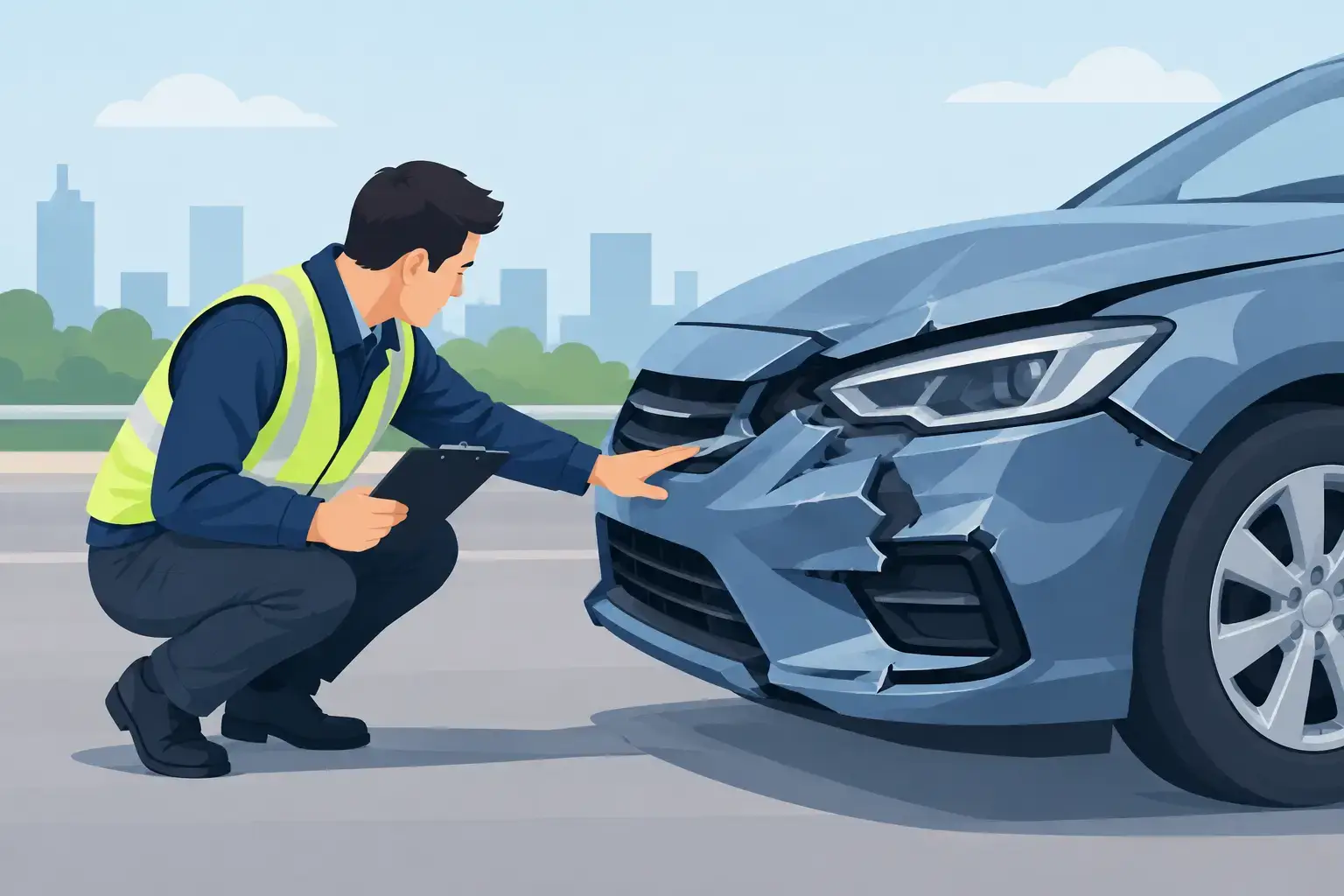
Look at the front, sides and rear from a few steps back. Note dents, scratches, cracked paint, damaged bumpers, broken grille sections, smashed lenses and panels that no longer line up cleanly. A gap between a bonnet, guard, boot or door can suggest that a panel or its mounting point has moved.
Then check the tyres and wheels. A kerb strike or side impact can damage a tyre wall, bend a wheel or affect suspension and alignment. If a tyre is flat, bulging, cut, rubbing against the bodywork, or a wheel sits at an unusual angle, the vehicle should not be driven.
Pay attention to the ground beneath the car as well. Clear water from air-conditioning can be normal, but coloured, oily or strong-smelling liquid needs attention. Coolant, oil, brake fluid and fuel leaks can quickly turn a repairable vehicle into an unsafe one.
Check the lights and visibility
Where practical, check that your headlights, indicators, brake lights and number plates are secure and visible. A cracked headlight may still illuminate, but water can enter the unit and damaged mounts may allow it to move. If a lamp is missing, loose or pointing in the wrong direction, avoid driving at night or in poor conditions.
Also look closely at the windscreen, mirrors and camera areas. Modern vehicles often have sensors and cameras in the windscreen, bumper, grille or side mirrors. A small impact near one of these areas may affect parking sensors, reversing cameras, lane support or emergency braking functions, even where the exterior damage appears minor.
Record the details before memories fade
Photographs and notes make the claims and quoting process much easier. Take wide photos showing the position of the vehicles and the wider scene, then close-up images of each damaged area. Photograph the other vehicle, its registration, and any relevant road signs, skid marks or hazards if it is safe to do so.
Exchange the necessary details with the other driver, including their name, registration, contact information and insurer where available. Record the date, time, location and a straightforward account of what happened. Avoid guessing about fault or agreeing to repair arrangements at the roadside. Your insurer will advise on the next steps for the claim.
It is also worth making a short note of how your vehicle behaved immediately after the impact. Did the steering pull? Did a warning light appear? Did a door become difficult to close? These details can help a repairer identify hidden damage during the assessment.
A guide to post crash inspections at home
If the vehicle was safe to move and you have returned home, inspect it again in good light. Crash damage is often easier to see once the car is clean, dry and parked on level ground.
Open and close the doors, boot and bonnet gently. They should latch securely without force, rubbing or unusual gaps. Check that windows operate, the central locking works and the boot seal sits correctly. Do not force anything that has shifted - forcing a misaligned panel can create further damage.
Inside the cabin, check for dashboard warnings, loose trim, wet carpet and changes to seatbelt operation. Seatbelts should pull out and retract smoothly. If a belt has tightened sharply in the crash, it may need replacement even if it looks undamaged.
A short, cautious drive may be reasonable only if there are no leaks, warning lights, loose parts or steering concerns. Keep it local and listen for rubbing, knocking, vibration or squealing. Notice whether the car tracks straight, the steering wheel sits centred and the brakes feel normal. If anything feels different, stop driving and book an inspection.
Why visible damage is only part of the repair
A scuffed bumper may need a straightforward repair and colour-matched repaint. On the other hand, a bumper can hide damage to its reinforcement bar, brackets, absorber, sensors or nearby cooling components. The same is true for a dented guard, which can affect headlight alignment, wheel clearance or door operation.
Professional assessment is about finding the full scope of damage before repairs begin. A workshop can inspect panel gaps, mounting points, structural areas and paint damage, then prepare a clear repair plan. Where parts need replacement, quality supplier parts and proper fitting matter just as much as the finish you can see.
There is a practical trade-off here. Cosmetic damage may be safe to schedule around work and family commitments, while a vehicle with possible structural, wheel, safety-system or cooling damage needs prompt attention. Honest advice should distinguish between the two, rather than treating every scrape as an emergency or dismissing a significant impact because the paint looks fine.
When to call your insurer and repairer
Contact your insurer as soon as you can after the incident, particularly where another vehicle, property damage, injury or significant repair work is involved. Have your photos, notes and claim details ready. Ask what information they need and whether they require an assessment before repairs are authorised.
You can then arrange a repair estimate with a qualified panel and paint workshop. A good estimate explains the visible work, flags potential hidden damage that may only be confirmed once parts are removed, and sets realistic expectations for timing. Most standard body repairs can be planned efficiently, but parts availability, sensor calibration and the extent of damage all affect turnaround.
At Professional Panel + Paint in Grey Lynn, the team can assess accident and cosmetic damage, provide transparent repair advice and assist with insurer coordination. For many repairs, the aim is to have vehicles back on the road within five to seven working days, with the final timeframe confirmed once the damage and parts requirements are known.
Do not postpone these warning signs
Book an inspection promptly, or arrange a tow, if you notice any of the following:
Airbag, engine, brake, steering or driver-assistance warning lights
Pulling, vibration, an off-centre steering wheel or uneven tyre contact
Coolant, oil, fuel or brake fluid leaks
A bonnet, boot, door, bumper, wheel or light that is loose or misaligned
Steam, overheating, a burning smell or unusual noises after the impact
These symptoms do not always mean the repair will be major, but they do mean it is not sensible to guess. Early assessment can prevent further damage and helps ensure the vehicle is returned to a safe, roadworthy condition.
After a crash, the best next step is rarely to judge the damage by appearance alone. Take the photos, keep the details, listen to what the car is telling you and arrange professional advice before a small concern becomes a larger repair.


Comments