

Rear Collision Repair for Auckland Drivers
A rear-end crash can leave more damage than a scuffed bumper. Even at low speed, the force can affect bumper reinforcement bars, boot alignment, rear sensors, lights, exhaust components and the body structure behind the visible impact. Rear collision repair is about finding that hidden damage as well as restoring the finish, so your vehicle is safe, properly aligned and ready for everyday driving again.
For Auckland drivers, the first priority is usually getting mobile again. The second is making sure a quick-looking repair does not become an ongoing problem with water leaks, warning lights, uneven panel gaps or poor resale value. A professional assessment gives you a clear picture of what needs attention before work begins.
What rear collision repair can involve
Every impact is different. A light knock in a car park may only mark the bumper cover and leave a small dent in the tailgate. A more substantial collision can push the bumper inward, crack mounting points, distort the boot floor or damage parking sensors and reversing cameras.
The visible paint damage is only one part of the job. Once the vehicle is inspected, a repairer may need to remove the rear bumper, tail-lights and interior trim to check the components behind them. This allows the team to inspect the reinforcement bar, absorber material, mounting brackets, rear body panels and wiring.
Depending on the damage, repairs may include panel beating, bumper restoration, plastic repairs, replacement parts, welding, alignment checks, spray painting and colour matching. If the vehicle has advanced driver-assistance features, sensors or cameras may also need testing and calibration after the repair. The right scope depends on the make and model, the impact point and how much force was involved.
Why hidden rear-end damage matters
A bumper is designed to absorb a degree of impact, but it cannot always show what happened underneath. It may spring back into place while brackets are broken or the impact bar has been compromised. A boot lid that still closes can be slightly out of alignment, allowing rainwater or road noise into the vehicle later on.
Modern vehicles also have more technology fitted into the rear. Parking sensors, blind-spot monitoring systems, rear cameras and radar units can all be affected by an impact, even if no warning light appears straight away. Replacing a cracked bumper without checking these systems can leave you with a vehicle that looks repaired but does not operate as intended.
Structural damage is another reason to avoid judging the repair by appearance alone. The rear section of the vehicle is engineered to manage impact forces. If body panels or mounting points are distorted, correct repair methods and measurements matter. A qualified repairer can determine whether parts can be repaired safely or whether replacement is the better option.
What to do after a rear-end collision
Start by checking that everyone is safe, then move the vehicle out of danger if it is safe and legal to do so. Take clear photos of the damage, both close up and from several angles. Photograph the other vehicle, number plate, location and any relevant road conditions, and exchange details with the other driver.
Avoid forcing the boot shut if it will not close properly, and do not ignore loose parts, a dragging exhaust, broken lights or fluid leaks. These are signs the vehicle needs attention before further driving. If the bumper is hanging loose or a tail-light is damaged, it may not be roadworthy.
Contact your insurer as soon as practical and ask what information they need for the claim. You can then arrange a repair assessment and receive advice on the damage, likely repair approach and expected timing. Early assessment is particularly useful when parts need to be ordered or when the damage could worsen with continued use.
Rear collision repair and your insurance claim
An accident is stressful enough without having to manage repair bookings, estimates and insurer questions on your own. For insurance repairs, the workshop can prepare a detailed estimate, document the damage and liaise with the insurer where required. This helps ensure the approved repair covers the full scope of accident-related damage, not just the initial visible marks.
Be honest and detailed when describing what happened. Mention whether the vehicle was pushed into another car, a pole or a kerb, as this can affect where damage is found. If a warning light appears later, tell the repairer and insurer promptly rather than assuming it is unrelated.
Excess payments, policy conditions and insurer approval times vary, so there is no single answer for every claim. The useful question is whether the repair plan is clear: what is being repaired, what is being replaced, which parts will be used and whether any additional work may be identified after dismantling. Transparent communication helps prevent surprises.
How a professional repair process works
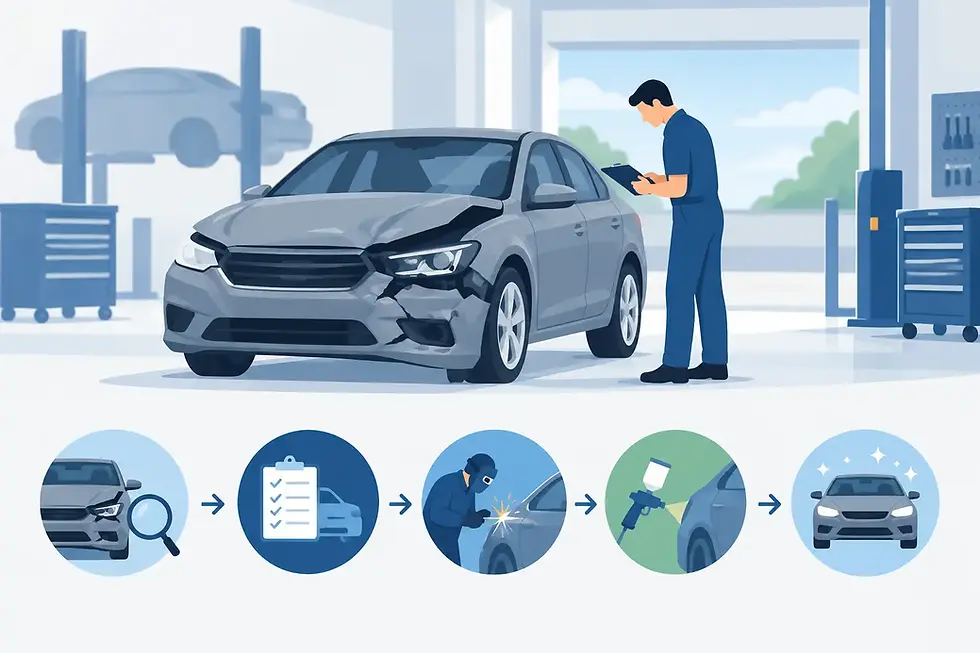
A proper repair begins with inspection, not paint. The workshop assesses the outer panels and the components behind them, records damage, and provides an estimate based on the repair method and parts required. Once the job is authorised, parts can be ordered and a repair booking confirmed.
The damaged area is dismantled as needed to expose hidden damage. Technicians repair or replace affected panels and components, check alignment, and prepare the surfaces for refinishing. Paint is colour matched to suit your vehicle, then applied and finished to restore a consistent appearance across the repaired area.
Before handover, the vehicle should be checked for panel fit, paint finish, lights, latches, sensors and other affected functions. A good repair should not leave obvious mismatched colour, rough edges, poor gaps or warning messages. If your vehicle has been repaired after a notable rear impact, ask what was inspected and whether any driver-assistance systems required calibration.
At Professional Panel + Paint, most repairs are targeted for completion within five to seven working days, although this depends on the extent of damage, insurer approval and parts availability. A minor bumper repair may be quicker. A vehicle requiring structural work, specialised components or imported parts can take longer, and it is better to have an honest timeframe than a rushed result.
Choosing repair over replacement
Not every damaged rear bumper or panel needs replacing. Modern plastic bumper repairs can be an effective option when the damage is localised and the bumper remains structurally sound. Repairing a scuff, shallow dent or small crack can reduce cost and avoid unnecessary replacement.
Replacement is often the safer choice when mounting points have broken, the bumper is badly torn, the reinforcement behind it is damaged or safety systems cannot be reliably restored. The same applies to tail-lights with broken housings or boot lids that have creased heavily. Your repairer should explain why a part is being repaired or replaced, rather than leaving you to guess.
Quality supplier parts and correct fitment make a real difference. A poorly fitting bumper can leave uneven gaps, interfere with sensors and spoil the vehicle’s finish. Saving money upfront by fitting unsuitable parts can create more expense later.
Questions worth asking before you book
You do not need to be an automotive expert to make a confident decision. Ask whether the quote includes an inspection behind the bumper, whether paint will be colour matched, and how the workshop handles further damage found during dismantling. If you are claiming through insurance, ask who will communicate with the insurer and what you need to provide.
It is also reasonable to ask about the expected turnaround, parts availability and whether a loan vehicle is available if you rely on your car for work or family commitments. Clear answers at the beginning make the repair process much easier to manage.
Can I drive with rear bumper damage?
It depends on the damage. A small cosmetic scuff may not affect how the vehicle drives, but loose bumper sections, broken lights, sharp edges, sensor faults, exhaust damage or a boot that will not latch need prompt attention. If you are unsure, arrange an assessment rather than taking a chance.
Will the repaired paint match the rest of my vehicle?
A professional workshop uses colour-matching technology and refinishing processes to achieve a close, consistent match. Paint age, previous repairs and the colour itself can influence the approach, which is why preparation and blending can be necessary for the best result.
A rear impact does not have to turn into a long-running vehicle problem. Get the damage assessed early, keep your insurer informed, and choose a repairer that explains the work clearly before your car goes into the workshop.


Comments